


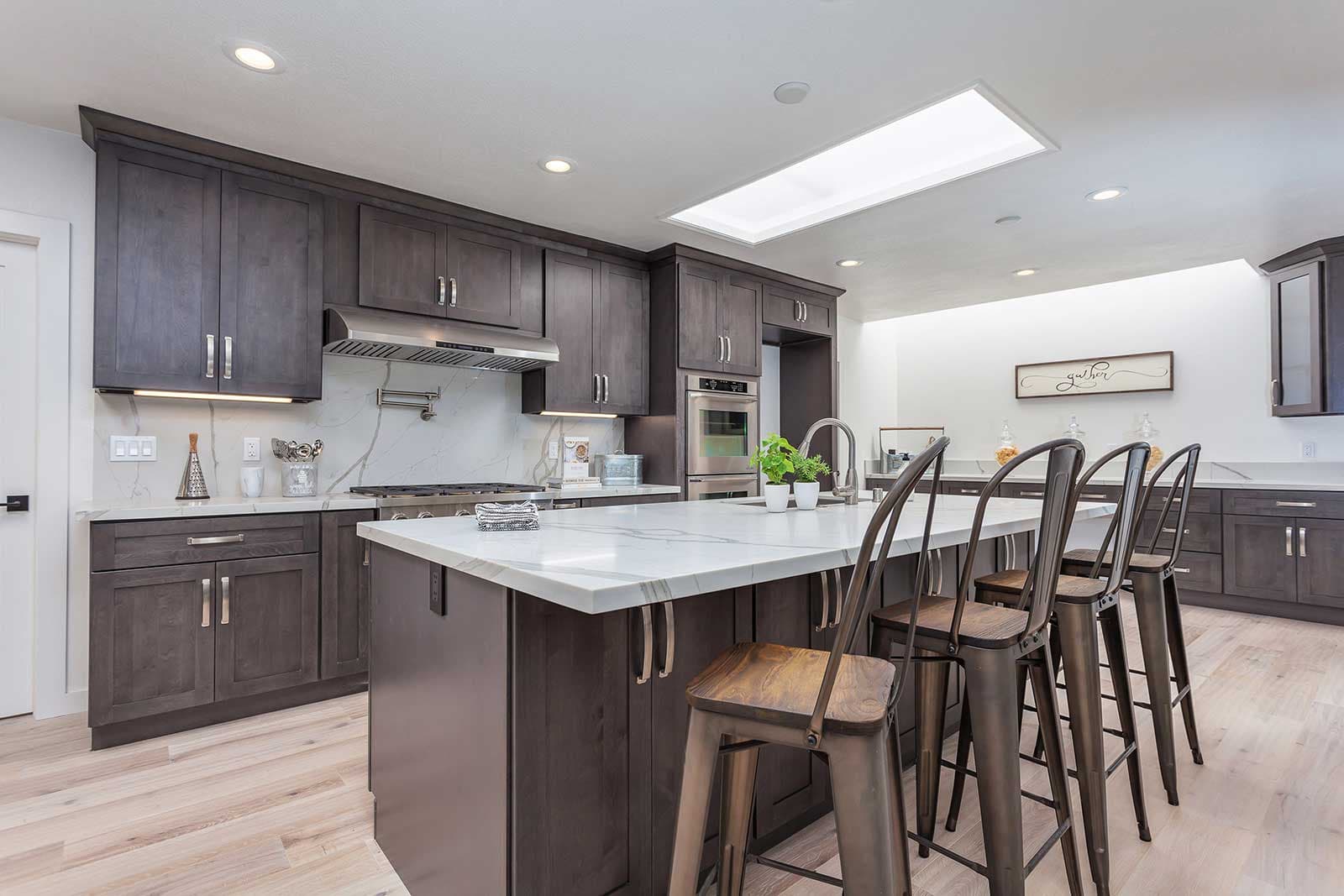
$45,000 buys a basic refresh. $250,000 or more buys a full luxury remodel. That’s the range for kitchen renovations in the Bay Area, and the premium behind those numbers is real: labor, permitting, and material expectations here run 30 to 50 percent higher than national averages. The upside is that a well-executed kitchen renovation in cities like Danville, Los Altos, or Walnut Creek recovers a meaningful share of its cost at resale, and the share is highest on the more modest projects.
This guide breaks the cost down by scope, by city, and by the specific factors that drive prices up or down. We’ll also cover what to watch for when you review bids, because in this market a low number on paper can cost you far more in the end.
What Is the Average Kitchen Renovation Cost in the Bay Area?
Our average project size across all renovation types is $180,000. Based on the projects we have coordinated at Renovation Bridge, here is how kitchen renovations break down in 2026:
Basic Kitchen Refresh: $45,000 to $85,000
This scope covers cabinet refacing or semi-custom cabinetry, new countertops (quartz or granite), updated appliances, new flooring, and refreshed lighting. You are keeping the same layout, the same footprint, and the same plumbing locations. This is the “same kitchen, better version” approach. It fits homes where the bones are solid but everything feels dated.
Mid-Range Kitchen Remodel: $85,000 to $165,000
A true remodel at this level involves reconfiguring the layout, moving plumbing or electrical, adding an island, upgrading to semi-custom or fully custom cabinetry, and often touching adjacent spaces like a dining room or butler’s pantry. Permits are required, a structural engineer may be involved if walls come down, and timelines run 10 to 16 weeks from demo to punch list.
Luxury Kitchen Renovation: $165,000 to $250,000+
At this tier you are looking at full custom cabinetry, natural stone countertops, high-end appliances (Wolf, Sub-Zero, Miele), integrated smart home systems, radiant floor heating, and potentially expanding the footprint into an adjacent room. Some projects in Atherton, Saratoga, and Los Altos Hills run $350,000 to $400,000 when the kitchen is part of a broader home transformation.
What Drives Kitchen Renovation Costs Up in the Bay Area?
Labor
Skilled tradespeople in the Bay Area command premium wages. A licensed electrician in Contra Costa or Santa Clara County bills at $120 to $180 per hour. Plumbers run $150 to $200 per hour. General contractors typically mark up subcontractor labor by 15 to 25 percent on top of their own management fees. When you see a bid that seems unusually low, labor is almost always where corners are being cut.
Permits and Inspections
Any structural changes, plumbing moves, or electrical upgrades require permits. Permit fees vary significantly by city. San Jose charges based on project valuation, so expect $2,500 to $6,000 for a mid-range kitchen. Danville and other Contra Costa cities run $1,500 to $4,000. Atherton and some Peninsula cities can take 6 to 10 weeks just for permit approval, which needs to be factored into your timeline and carrying costs.
Material Selection
Quartz countertops run $80 to $130 per square foot installed. Natural quartzite or slab marble pushes $150 to $250 per square foot. Semi-custom cabinetry from a reputable manufacturer runs $600 to $1,200 per linear foot installed. Fully custom cabinetry from a local Bay Area shop can reach $1,800 to $3,000 per linear foot. These numbers compound quickly in a 400-square-foot kitchen.
Layout Changes
Keeping your kitchen’s existing layout is the single biggest lever for controlling cost. Moving a sink means moving drain lines. Moving a gas range means re-routing a gas line. Opening a wall to an adjacent room may involve a structural beam, engineering drawings, and additional inspections. Each of these changes adds $5,000 to $25,000 incrementally.
Kitchen Renovation Costs by City
The Bay Area is not one market. Here is what we see across the cities we serve:
East Bay: Danville, Orinda, Walnut Creek, Lafayette, Alamo, San Ramon
Mid-range kitchen remodels in these markets typically run $90,000 to $145,000. Permit timelines are more predictable than the Peninsula, and there is a strong pool of licensed contractors who specialize in the area’s prevalent ranch and split-level homes.
South Bay: Los Altos, Saratoga, Los Gatos, Los Altos Hills, Atherton
Expect to budget $120,000 to $200,000 for a comparable mid-range scope. Permit approvals in some of these cities run longer, and client expectations around finishes and fixtures push budgets higher. Custom cabinetry and high-end appliances are the norm here.
Peninsula: Palo Alto, Woodside, Menlo Park
Similar to South Bay in cost structure. Palo Alto’s planning and building department is efficient but thorough. Projects in Woodside often involve larger square footage and more complex structural work.
San Francisco and North Bay: Tiburon, Sausalito
San Francisco adds its own complexity: older building stock, HOA or condo board approvals, and union labor requirements for some project types can push budgets 20 to 30 percent above equivalent East Bay projects.
How to Budget for a Bay Area Kitchen Renovation
Start with your scope, not a number
The biggest mistake homeowners make is starting with a budget ceiling before they have defined what they actually want to accomplish. A $100,000 budget in Danville can do a beautiful mid-range remodel. The same $100,000 in Los Altos Hills might only cover a refresh with modest material choices. Define the scope first, then pressure-test it against the market rate.
Build in a contingency
Add 15 to 20 percent above your contractor’s bid as a contingency reserve. In older Bay Area homes, especially those built before 1980, opening walls frequently reveals outdated electrical panels, galvanized plumbing that needs replacement, or structural elements that don’t meet current code. None of that is a contractor mistake. They are unknowns that become known only once demolition begins.
Understand what is in the bid
A complete contractor bid should itemize labor, materials, subcontractor costs, permit fees, and the contractor’s overhead and profit margin. A single total number with no line items is a red flag. You can’t compare apples to apples if you don’t know what’s in each apple.
Finalize decisions before construction starts
Change orders are design decisions made after construction begins, and they are the leading cause of budget overruns in kitchen renovations. Finalize your cabinet layout, appliance selections, countertop material, plumbing fixtures, and lighting plan before your contractor breaks ground. This discipline alone can save $10,000 to $30,000 on a mid-range project.
Red Flags on Kitchen Renovation Bids
After speaking with more than 350 Bay Area contractors and vetting fewer than 10 percent of them into our network, we have learned to recognize the warning signs in a bid before a single tile is pulled.
- The bid is 30 percent or more below the others. Labor and material costs are roughly the same for every contractor, so there is no magic. A dramatically low bid means something is being left out, usually labor quality, permit costs, or material grade.
- No license number on the bid. Every licensed contractor in California has a CSLB license number. You can verify any license at cslb.ca.gov in about 30 seconds.
- Pressure to start immediately. Reputable contractors in the Bay Area are booked 4 to 12 weeks out. Urgency is a tactic, not a compliment.
- Large upfront deposit. California law limits contractors from requesting more than 10 percent of the total project cost or $1,000, whichever is less, as an initial deposit.
- Vague scope of work. If the contract doesn’t specify cabinet brand and line, countertop material and thickness, appliance models, tile SKUs, and hardware selections, you have no basis for holding anyone accountable.
How Renovation Bridge Fits In
The traditional path is three bids from contractors you found on Yelp or through a neighbor referral. That works, but it puts the vetting burden entirely on you. At Renovation Bridge, we’ve done that work for every contractor in our network. Each one is license-verified, insured, and bonded. We visit their active job sites and ask the subs whether they get paid on time, because a GC who can’t pay subs will have subs stop showing up, and your kitchen sits gutted for weeks. NBC Bay Area covered our vetting process because it’s genuinely different from what aggregator platforms do.
Our average kitchen project is around the $100,000 mark, with most homeowners receiving at least 3 bids from our kitchen-specific contractors who have showrooms around the Bay Area in Pleasanton, San Jose, and Burlingame. That lets you see and feel the materials going into your kitchen before construction starts. And the service is completely free to homeowners. If you are in Walnut Creek, Orinda, Los Altos, Saratoga, or any of the other communities we serve, visit our FAQ page to learn how the process works.
Frequently Asked Questions
How much does a kitchen renovation cost in the Bay Area in 2026?
Kitchen renovations in the Bay Area range from $45,000 for a basic refresh to $250,000 or more for a full luxury remodel. A basic refresh covers new countertops, cabinet refacing, updated appliances, and flooring without layout changes. A luxury remodel adds custom cabinetry, high-end appliances, and structural changes. The most common scope for Bay Area homeowners is a true remodel that reconfigures the layout and upgrades to semi-custom cabinetry, and that runs $85,000 to $165,000. These numbers reflect 2026 Bay Area labor rates and material costs, which run 30 to 50 percent above national averages. Your specific cost depends on square footage, the extent of layout changes, material selections, permit complexity in your city, and the contractor’s overhead structure. Getting at least three fully itemized bids from licensed contractors is the best way to establish an accurate baseline for your project.
What is the biggest factor in kitchen renovation cost?
Labor is the largest single cost driver in any Bay Area kitchen renovation, typically representing 35 to 45 percent of total project cost. Skilled tradespeople in the region command some of the highest wages in the country. The second biggest factor is scope, specifically whether you are changing the layout or keeping it the same. Moving a sink, relocating a gas line, or removing a load-bearing wall each add $5,000 to $25,000 incrementally. Material selections are the third major variable. The difference between a mid-grade quartz countertop at $85 per square foot and a natural quartzite slab at $200 per square foot adds up quickly across a full kitchen. Permit fees in your specific city and the age of your home are additional cost factors that are easy to underestimate in early budgeting.
How long does a kitchen renovation take in the Bay Area?
A basic kitchen refresh without layout changes typically takes 6 to 10 weeks from demo to completion. A mid-range remodel that includes layout changes, permit approvals, and custom cabinetry runs 12 to 18 weeks. Luxury projects with full custom cabinetry or complex structural work can take 20 to 30 weeks or more. These timelines include pre-construction phases, and permit submission and approval alone can take 4 to 10 weeks depending on the city. Danville, Walnut Creek, and San Ramon tend to have faster permit turnarounds than San Francisco or some Peninsula cities. The most common cause of timeline extension is change orders. Finalizing all material selections and design decisions before your contractor breaks ground is the single most effective way to keep your project on schedule.
What should I watch out for when hiring a kitchen contractor in the Bay Area?
The most important red flag is a bid that is significantly lower than the others without a clear explanation. Labor and material costs are roughly the same for every contractor, so dramatic price differences almost always indicate something being omitted: unlicensed subcontractors, permit costs excluded, or lower-grade materials than specified. Always verify a contractor’s CSLB license number at cslb.ca.gov and confirm their general liability insurance and workers’ compensation coverage directly with their insurer. Request a certificate of insurance rather than a verbal confirmation. Read every contract carefully for scope specificity, because cabinet brands, countertop materials, appliance models, and tile selections should all be named. California law limits initial deposits to $1,000 or 10 percent of the total project cost, whichever is less. Any contractor pushing for more upfront is a concern.
Is a kitchen renovation worth it in the Bay Area?
In most cases, yes, particularly if you plan to stay in your home for at least three to five years or are preparing it for sale. Our cost calculator models kitchen resale recovery at roughly 85 percent on a modest refresh, 65 percent on a mid-range remodel, and 45 percent on a high-end one, using Pacific regional data from the 2025/2026 Cost vs. Value Report. The pattern to notice is the direction: recovery falls as the finish level climbs, because luxury appliances and custom cabinetry do not fully resell. In affluent markets like Danville, Los Altos, and Orinda, where buyers have high expectations for finishes and functionality, a dated kitchen can actively suppress your home’s value and days on market. The calculus changes if you are planning to sell within two years, as transaction costs can erode the value return. Then there is the lifestyle return, meaning how the space feels every day you live in it. That one is harder to quantify, but homeowners consistently cite it as the reason they do not regret the investment.