

A finished backyard home can arrive on a truck and be craned onto its foundation in a single afternoon. Most homeowners don’t believe that until they watch it happen. A prefab ADU is a fully permitted second home built in a factory and installed on your property, typically in a fraction of the time it takes to build the same unit from scratch on-site. If you want a rental unit, a place for aging parents, a home office, or a guest house, prefab is one of the fastest and most predictable ways to add real, livable square footage to a Bay Area lot.
This guide covers what a prefab ADU is, how the process works from design to move-in, the real benefits and trade-offs, who they suit, what they cost in the Bay Area in 2026, and the California rules that make all of this possible. At the end you’ll find our own lineup of prefab ADU models with floor plans and installed pricing so you can see real examples.
What Is a Prefab ADU?
An ADU (Accessory Dwelling Unit) is a second, fully self-contained home on a residential lot, with its own kitchen, bathroom, sleeping area, and entrance. People call them granny flats, in-law units, backyard cottages, or casitas. A prefab ADU means most of the building gets constructed off-site in a controlled factory and then delivered to your property, instead of framed board by board in your backyard.
There are a few different types of prefab, and the distinction matters:
- Modular ADU. Built as complete three-dimensional sections in a factory, with framing, plumbing, wiring, insulation, and most interior finishes already installed, then trucked in and set onto a permanent foundation, usually by crane. Modular units are built to the same California building code as a site-built home, carry a state HCD insignia, and once set on a foundation they appraise and finance much like any other house. This is the type most reputable Bay Area prefab ADU companies deliver, and it is what our models are.
- Panelized (or “kit”) ADU. The factory builds flat wall, floor, and roof panels that ship flat and are assembled on-site like a kit. This offers more design flexibility and fits tighter-access lots, but on-site assembly takes longer than a modular set.
- Manufactured (HUD-code) ADU. Built on a permanent steel chassis to a federal code rather than California’s building code. It’s usually the cheapest option, but it looks different, appraises lower, and is much harder to finance. We generally steer homeowners away from it for a long-term backyard home.
The short version: modular means whole rooms are built and finished in a factory and craned onto a foundation, panelized means flat panels are assembled on-site, and stick-built means everything is built from raw materials in your backyard. When most people say “prefab ADU” in the Bay Area, they mean modular.
How Prefab ADUs Work
The single biggest reason prefab is faster comes down to one word: parallel. While your unit gets built in the factory, the site work in your backyard (grading, trenching, and the foundation) happens at the same time. In traditional construction those steps run one after another, in sequence, exposed to weather and scheduling delays. Here is how a typical prefab project flows:
- 1. Design and model selection (1 to 4 weeks). You choose a model and floor plan that fits your lot and budget, then select finishes. Because the engineering is already done, this stage is far quicker than a custom design from scratch.
- 2. Permitting (about 1 to 3 months). Plans are submitted to your city or county. California law requires a decision on a complete ADU application within 60 days, or as little as 30 days if you use a pre-approved plan.
- 3. Factory build + site prep (happening together, 6 to 12 weeks). The unit is framed, wired, plumbed, insulated, and finished indoors while your foundation and utility stub-outs are prepared on-site.
- 4. Delivery and installation (often 1 to 2 days). The modules are trucked in and craned onto the foundation. This is the dramatic part. A backyard home appears in an afternoon.
- 5. Hookups and final inspection (a few weeks). Crews connect water, sewer, electrical, and gas, seam the modules together, finish exterior work, and your city does the final inspection before issuing occupancy.
All in, a prefab ADU typically reaches move-in roughly 4 to 7 months from contract, versus 9 to 16 months for a comparable site-built unit. The disruptive, noisy phase in your backyard also gets measured in days of crane work instead of months of framing.
One thing worth being clear about: even with prefab, the foundation, site work, and utility connections still happen on your property and must pass your local building department’s inspection. The factory certification covers the unit itself. Your city still signs off on everything done on-site.
The Benefits of Going Prefab
Prefab is not automatically the right answer for every lot, but when the conditions line up, the advantages are real:
- Speed. Because the factory build and site work run in parallel, total timelines are commonly 30 to 50 percent shorter than site-built. For a rental, that means rent starts months sooner.
- Price predictability. Catalog models are sold at largely fixed prices, which dramatically reduces the change-order surprises that blow up traditional construction budgets.
- Factory quality control. Building indoors on jigs, with consistent crews and tooling, produces tighter tolerances and avoids materials sitting out in the rain mid-build.
- Less disruption. Days of activity in your backyard instead of months of trades coming and going.
- Less waste. Off-site construction cuts jobsite material waste substantially, and tight factory assembly tends to produce a well-insulated, energy-efficient unit.
To be straight with you, there are real trade-offs too, and a good ADU partner will tell you about them up front:
- You need crane and truck access. Modules require a path wide and clear enough for delivery and a crane set. Narrow or steep driveways, overhead power lines, and mature trees can make a lot difficult or, occasionally, unsuitable.
- Site work is still required. The foundation, trenching, and utility connections aren’t optional. They happen regardless of how the unit is built.
- Less custom flexibility. You can pick finishes, but you generally can’t redraw the floor plan. If you want a fully bespoke, architect-designed unit, panelized or stick-built may suit you better.
Who Prefab ADUs Are Right For
Over and over, we see prefab ADUs make the most sense for a few clear situations:
- Multigenerational families. Aging parents or adult children who want to be close but keep their independence. Proximity without sharing a roof.
- Homeowners who want rental income. Prefab’s faster timeline starts that income sooner, whatever your neighborhood’s rental comps turn out to support.
- People who need dedicated space. A home office, studio, gym, or guest house that keeps work and life separate.
- Owners focused on long-term value. A permitted, permanent second unit adds usable square footage and a rentable asset to the property.
- Anyone who values certainty. If a fixed price and a predictable timeline matter more to you than a fully custom design, prefab is hard to beat.
Prefab is a weaker fit when a lot has steep slopes, very tight or sloped access, or overhead obstructions that make craning impractical. It’s also a weaker fit for homeowners who want a one-of-a-kind, highly customized design. In those cases we’ll tell you honestly that a site-built or panelized approach is the better route.
Prefab ADU Models and Floor Plans
To make this concrete, here is our own lineup of prefab ADU models. Each is a 1-bed, 1-bath unit, and the prices shown are fully installed, meaning they include the foundation, utilities, delivery, and installation. You can explore every model, with full floor plans, on our ADU models page.
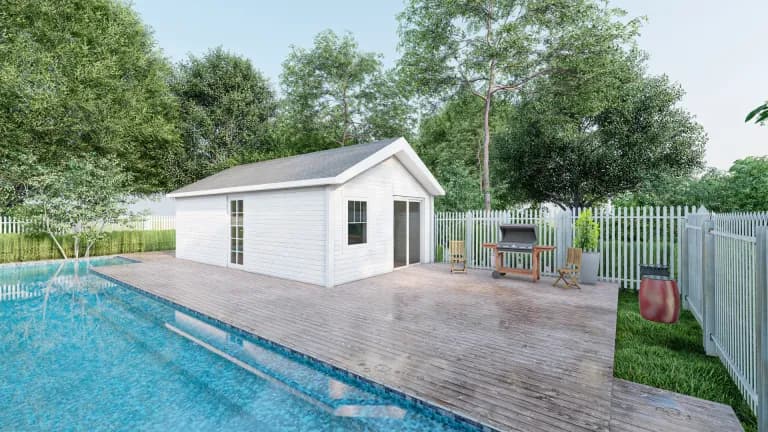
Model 400A
$195,000390 sq ft · 15' × 26' · 1 bed / 1 bath
View this model
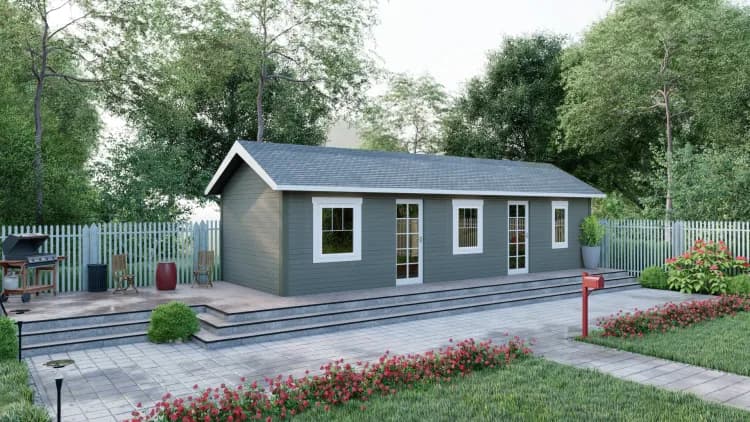
Model 500
$200,000500 sq ft · 14' × 36' · 1 bed / 1 bath
View this model
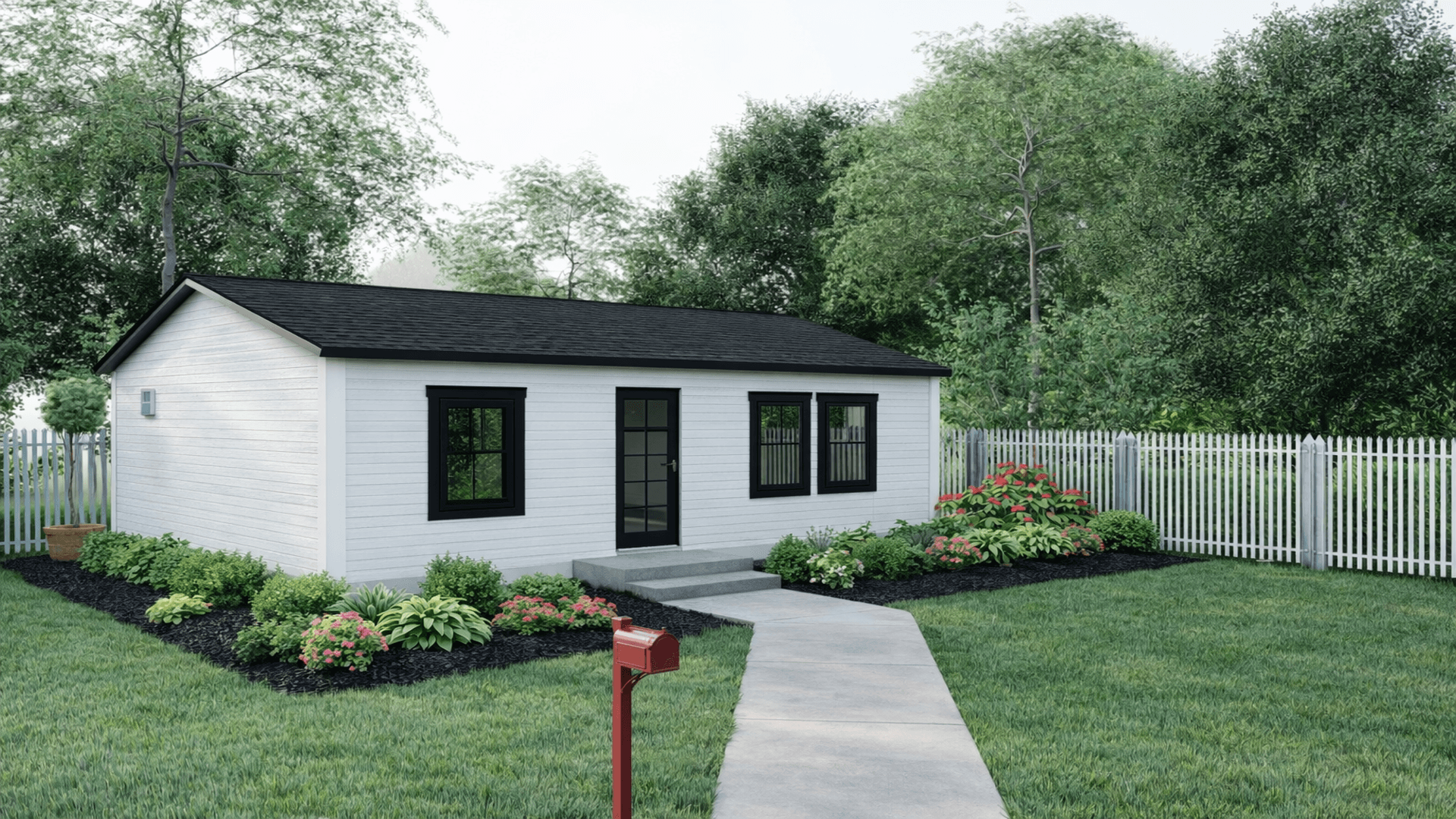
Model 600
$235,000600 sq ft · 20' × 30' · 1 bed / 1 bath
View this model
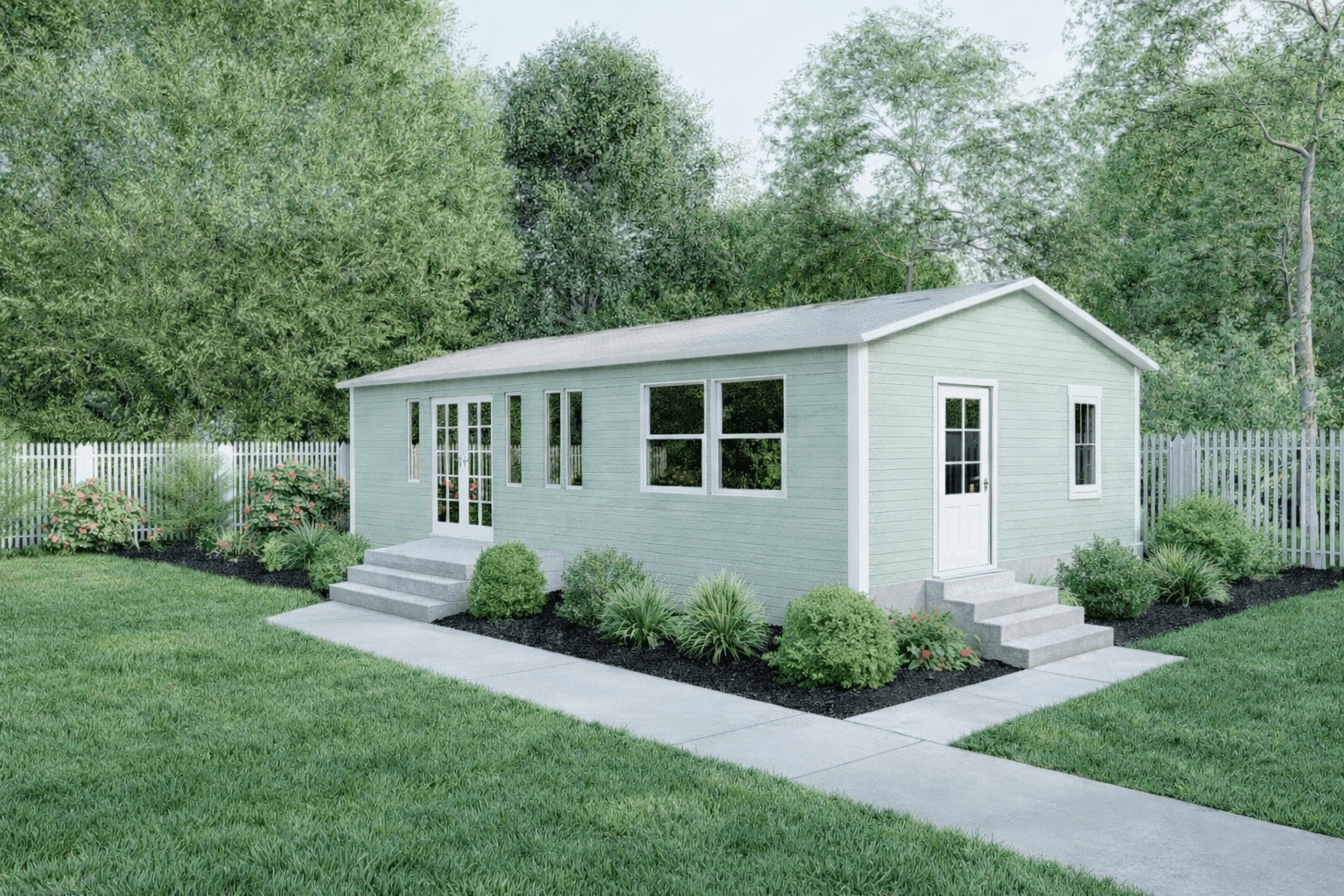
Model 700
$245,000700 sq ft · 20' × 37' · 1 bed / 1 bath
View this model
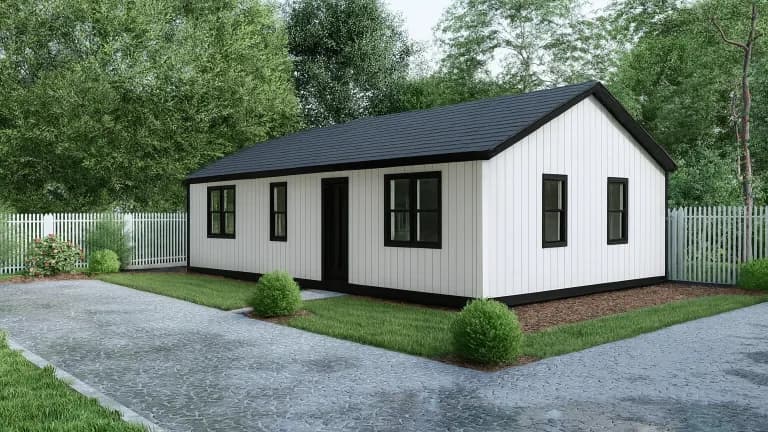
Model 800A
$250,000800 sq ft · 20' × 40' · 1 bed / 1 bath
View this model
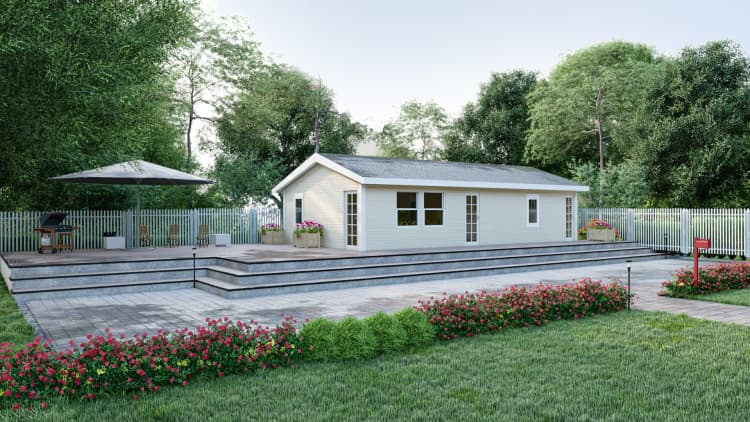
Model 900
$265,000900 sq ft · 23’4" × 40' · 1 bed / 1 bath
View this model
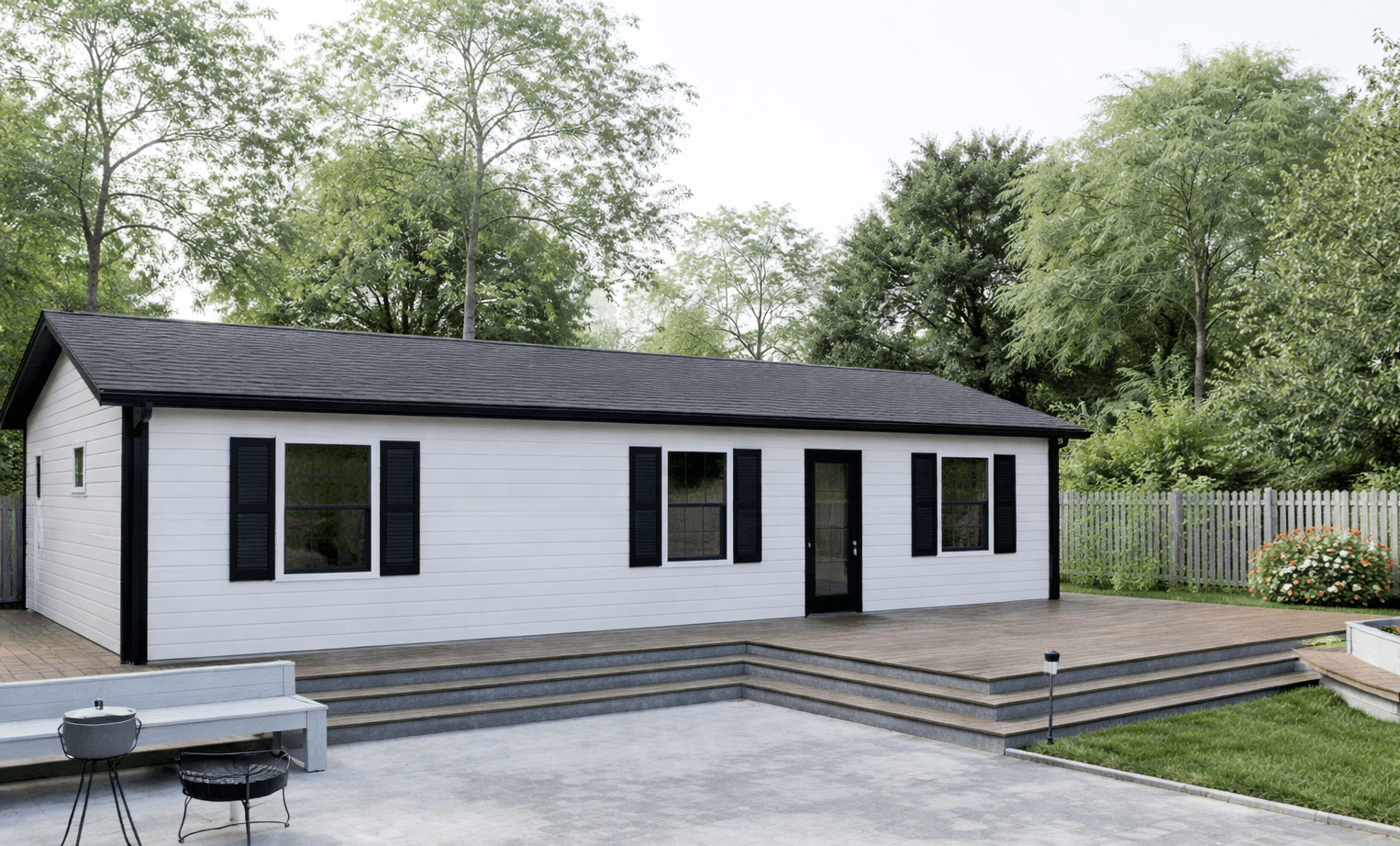
Model 1000
$295,0001,000 sq ft · 23’4" × 44' · 1 bed / 1 bath
View this model
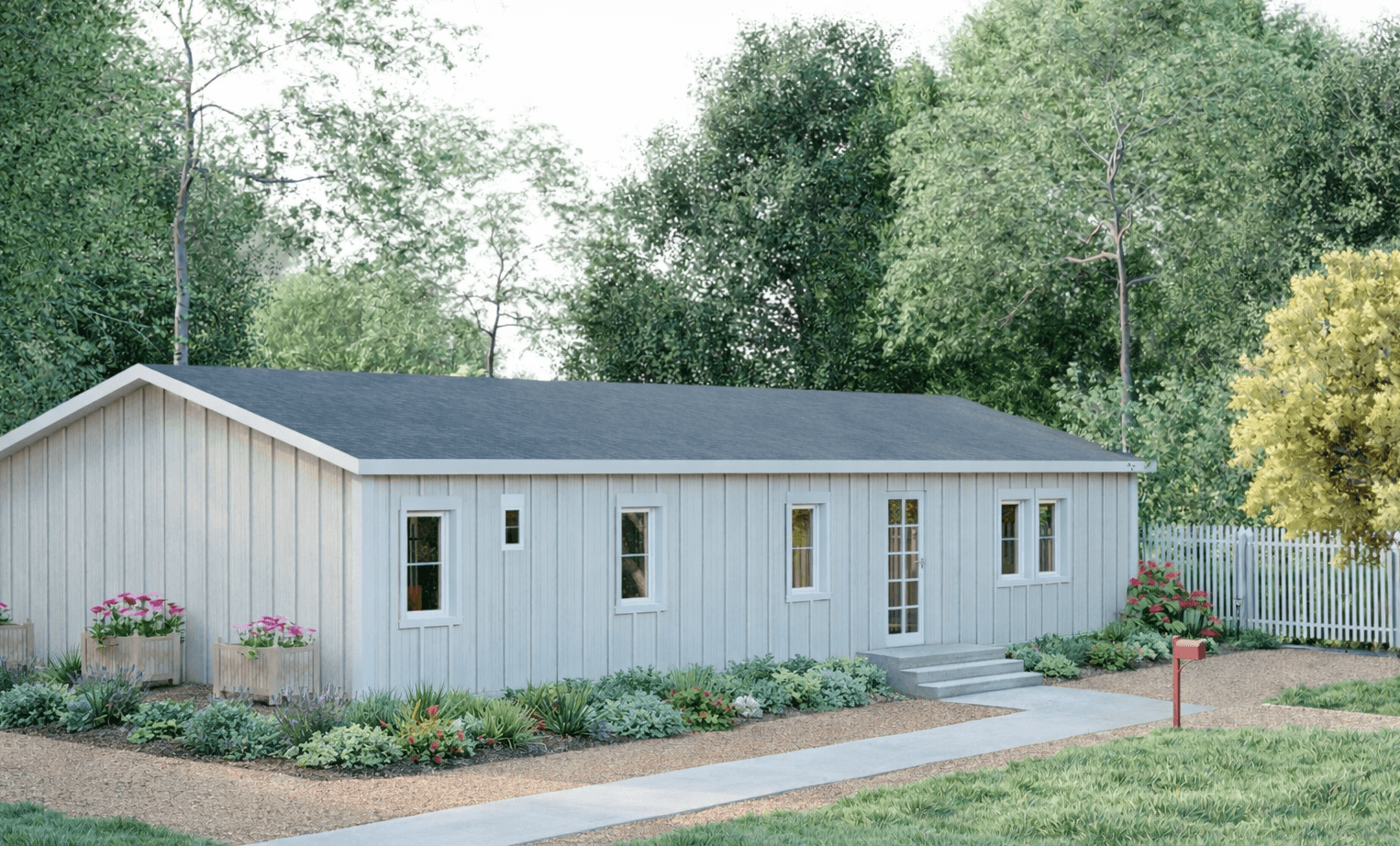
Model 1200
$305,0001,200 sq ft · 23’4" × 52' · 1 bed / 1 bath
View this model
Sizes run from a compact 390-square-foot studio-style unit up to a spacious 1,200-square-foot home, so there’s a footprint to match most backyards and budgets. Every model comes with a detailed floor plan, so you can see exactly how the kitchen, bathroom, and living space lay out before you commit.
What a Prefab ADU Costs in the Bay Area
Our prefab ADU models range from $195,000 for the 390-square-foot 400A up to $305,000 for the 1,200-square-foot model, fully installed. Foundation, utilities, delivery, and installation are all included in that number. For comparison, a traditional site-built detached ADU in the Bay Area commonly runs $400 to $650 per square foot, which puts a comparable custom unit in the $350,000 to $650,000-plus range once everything is added up.
The most important thing to understand about ADU pricing, prefab or not, is the difference between a base unit price and an all-in price. Many prefab companies advertise the cost of the building alone, which makes prefab look dramatically cheaper than a site-built quote that already bundles everything. The honest comparison is all-in against all-in. That’s why we quote installed pricing that already includes the foundation, utilities, delivery, and installation.
A few costs can still be additional depending on your specific property and city:
- City permit and impact fees. These vary by jurisdiction. California prohibits impact fees on ADUs under 750 square feet, which saves real money and pushes many homeowners toward a sub-750-square-foot unit.
- Long utility runs. If the unit sits far from existing water, sewer, or electrical service, the extra trenching adds cost.
- Difficult site conditions. Steep grading, retaining walls, tree removal, or limited crane access can each add to the project.
Prefab’s real edge is speed and price certainty rather than a guaranteed rock-bottom number. On small-to-mid-size units with good access, it’s genuinely cost-effective. On larger or difficult lots, the gap with site-built narrows.
California ADU Rules You Should Know
California has spent the last several years stripping away local barriers to ADUs, which is a big part of why they’ve become so popular. The rules below are statewide standards that cities must allow (your local jurisdiction can be more permissive, not less). The state’s Department of Housing and Community Development (HCD) is the controlling authority. Always confirm the specifics for your city.
- 60-day permit decision. Cities must approve or deny a complete ADU application within 60 days, or within about 30 days if you use a pre-approved plan.
- No owner-occupancy requirement. You are no longer required to live on the property to have a standard ADU, which makes rental-focused ADUs far more practical.
- Generous size allowances. Cities must allow at least 850 square feet for a studio or one-bedroom and 1,000 square feet for a two-bedroom, and detached ADUs up to 1,200 square feet are commonly permitted.
- Modest setbacks. New detached ADUs need only 4-foot rear and side setbacks.
- Parking waivers near transit. No parking can be required if the ADU is within half a mile of public transit, in a historic district, or part of a conversion.
- Pre-approved plan libraries. Every California city must now maintain a posted set of pre-approved standard ADU plans, which shortens the approval window. Prefab models often dovetail well with these programs.
How Renovation Bridge Helps
Adding an ADU touches design, permitting, site work, financing, and installation. Coordinating all of it is exactly where homeowners get stuck. At Renovation Bridge, we make it simple. We help you choose the right prefab model for your lot and budget, connect you with the vetted professionals who handle permitting and site work, and give you a clear, fully installed price up front instead of a base number that balloons later.
Every contractor in our network is license-verified, insured, and bonded. NBC Bay Area covered that vetting process because it genuinely differs from what aggregator platforms do. And the service is completely free to homeowners. You can browse the full model lineup and floor plans on our ADU models page, or get started and we’ll help you figure out what fits your property.
Frequently Asked Questions
What is a prefab ADU?
A prefab ADU is an accessory dwelling unit that gets built in a factory and then delivered and installed on a residential lot. An accessory dwelling unit is a fully self-contained second home with its own kitchen, bathroom, and entrance. The most common type in the Bay Area is modular, where complete sections of the home are built and finished indoors, trucked to the property, and craned onto a permanent foundation. Modular ADUs are built to the same California building code as a site-built home, carry a state HCD certification, and once installed they appraise and finance much like any other house. The factory approach is what makes prefab faster and more price-predictable than traditional, built-from-scratch construction.
How long does it take to build a prefab ADU?
A prefab ADU typically reaches move-in roughly 4 to 7 months from contract, compared with 9 to 16 months for a comparable site-built unit. The time savings come from running the factory build and the on-site work in parallel: while your unit is being constructed indoors, your backyard foundation, trenching, and utility connections are prepared at the same time. Permitting usually takes one to three months, the factory build runs six to twelve weeks alongside site prep, the modules are craned into place in as little as one to two days, and final hookups and inspection take a few more weeks. The disruptive, noisy phase in your backyard is measured in days rather than the months a stick-built project requires.
How much does a prefab ADU cost in the Bay Area?
Our prefab ADU models range from $195,000 for a 390-square-foot unit to $305,000 for a 1,200-square-foot unit, fully installed. That price includes the foundation, utilities, delivery, and installation. A comparable site-built detached ADU in the Bay Area commonly runs $400 to $650 per square foot, often landing in the $350,000 to $650,000-plus range all-in. When comparing quotes, make sure you are comparing all-in prices against all-in prices rather than a base unit price against a fully bundled one. A few items can be additional depending on your property, including city permit and impact fees, long utility runs, and difficult site conditions like steep grading or limited crane access. One more thing worth knowing: California waives impact fees on ADUs under 750 square feet.
Who is a prefab ADU best for?
Prefab ADUs are an excellent fit for multigenerational families who want aging parents or adult children close but independent, homeowners seeking rental income, and anyone who needs dedicated space like a home office, studio, or guest house. They are also ideal for owners who value a fixed price and a predictable timeline over a fully custom design. Prefab is a weaker fit for lots with steep slopes, very tight or sloped access, or overhead obstructions that make craning impractical, and for homeowners who want a one-of-a-kind architectural design. In those cases a site-built or panelized ADU is usually the better route.
Do I need to live on the property to build an ADU in California?
No. California removed the owner-occupancy requirement for standard ADUs, so you are no longer required to live on the property to add one. That change is a big reason rental-focused ADUs have taken off. Cities must also approve or deny a complete ADU application within 60 days, must allow generous sizes (at least 850 square feet for a one-bedroom and 1,000 for a two-bedroom), and cannot require parking if the ADU is within half a mile of public transit. Rules vary by city and the state’s HCD is the controlling authority, so confirm the specifics for your jurisdiction before you start.